


August 7, 2026

WINNING ON AND OFF THE FIELD

Share this article

Every athlete knows what it takes to win on the field: preparation, film study, a coaching staff, a team you trust, and the discipline to show up on the days you don't feel like it. What most athletes never get told is that every one of those same habits builds a second win — the one that happens after the game is over.


You Already Have a Winning Playbook

You don't walk into a game without a plan, and you shouldn't walk into your finances without one either. The athletes who handle their money the best after their career aren't necessarily the ones who earned the most — they're the ones who treated their finances like a second sport worth training for.

  • On the field: you study film. Off the field: you study your contract and your tax picture.
  • On the field: you have a coaching staff. Off the field: you need an agent, a financial professional, and an attorney who actually work for you.
  • On the field: you train year-round. Off the field: financial literacy is a year-round habit too, not a one-time seminar.


The Score That Follows You Home


A win on Saturday or Sunday feels immediate — but it doesn't follow you the way your financial decisions do. The contract you sign, the deal you take, the advisor you trust: those are the plays that are still on the scoreboard ten and twenty years later, long after the highlight reel stops getting views.


That's the real definition of winning off the field — not avoiding risk entirely, but making sure the risks you take are the ones you actually chose, with a real plan behind them.


Building the Same Kind of Team You'd Build on the Field


Nobody expects an athlete to handle strength training, nutrition, film study, and recovery alone — you have specialists for each. Financial planning, insurance, taxes, and NIL deals deserve the same specialist mindset instead of getting handled by whoever's easiest to reach.


Winning the game off the field isn't a separate skill from winning on it — it's the same competitive instinct, pointed at a longer season.


ADDITIONAL acsa news & press

By Demetrius Liptrot August 7, 2026
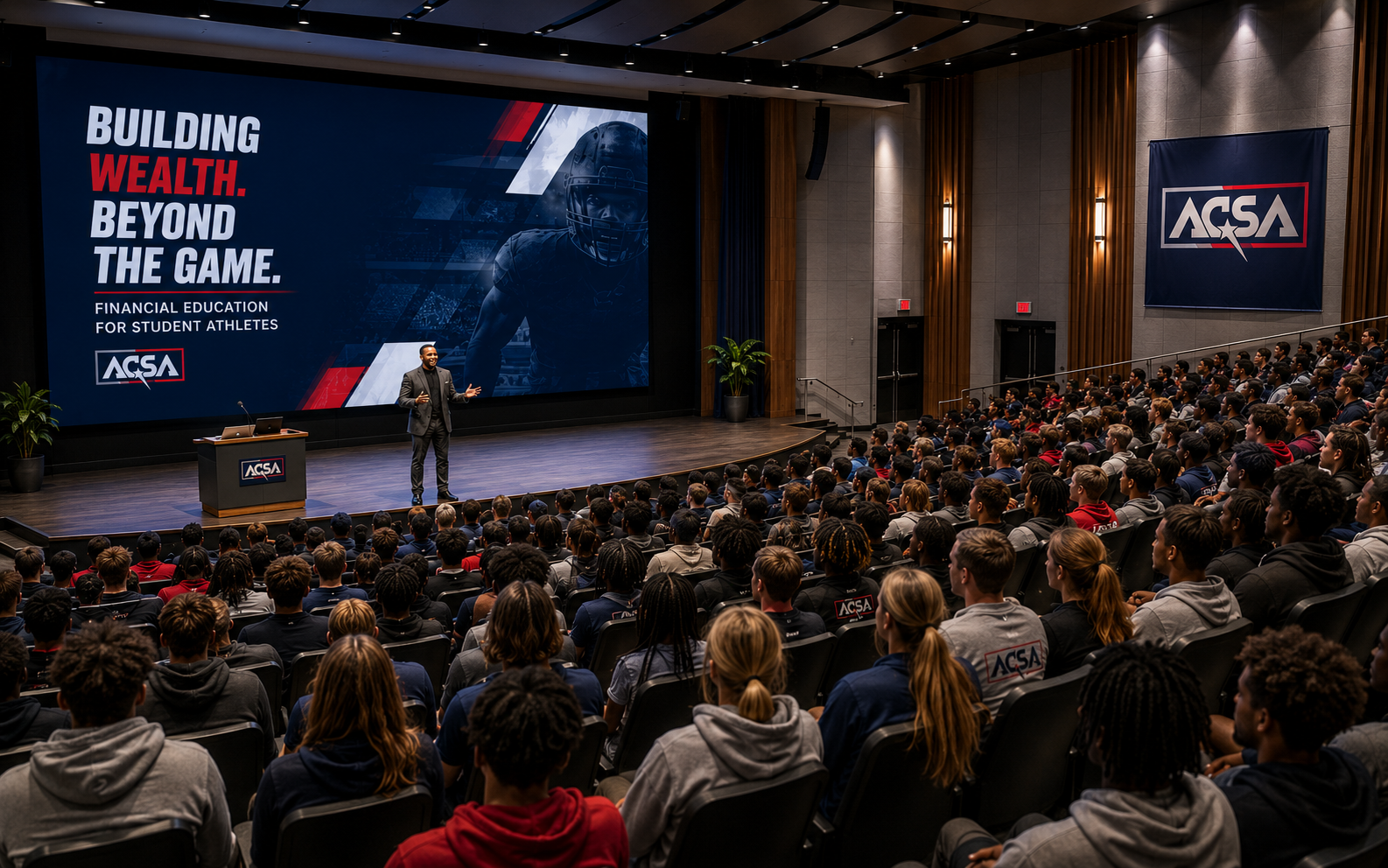
Think about how many hours you've spent getting coached. Footwork. Film study. Nutrition. Recovery. By the time you reach any serious level of competition, you've had more expert instruction than almost anyone else your age — in every part of your life except one. Nobody coaches you on money. And it shows: 78% of NFL players face financial stress within two years of retirement, and 60% of NBA players are broke within five. Those aren't unlucky outliers — they're the predictable result of talented people making six- and seven-figure decisions with zero training.
By Demetrius Liptrot March 11, 2026
Think about how many hours you've spent getting coached. Footwork. Film study. Nutrition. Recovery. By the time you reach any serious level of competition, you've had more expert instruction than almost anyone else your age — in every part of your life except one. Nobody coaches you on money. And it shows: 78% of NFL players face financial stress within two years of retirement, and 60% of NBA players are broke within five. Those aren't unlucky outliers — they're the predictable result of talented people making six- and seven-figure decisions with zero training.
By Roderick Liptrot March 5, 2026
Every athlete's career ends. That's not pessimism — it's just math. What doesn't have to end on the same timeline is everything that career built: the income, the opportunity, and the legacy it can leave behind. That gap — between a career that ends and a life that keeps going — is exactly why Alternative Careers in Sports Academy (ACSA) exists.